Structural Drying in Hastings, MN
The drying specialist measures wet materials, sets an equipment plan and follows daily progress toward a documented goal. Hastings buildings need more than dry room air: framing, subfloors and concealed layers must receive attention before repairs cover them again.
(888) 432-4933Review moisture left inside the structure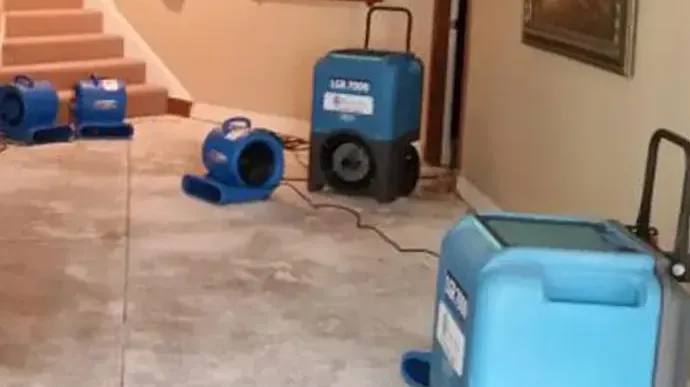
How structural drying is handled in Hastings
The restoration specialist records the wet boundary before selecting equipment. Daily material readings and room conditions determine the next adjustment, with the final inspection checking concealed layers as well as exposed surfaces.
- 1
Establish the reference and map
The specialist records affected materials and comparison readings before equipment placement. The map distinguishes visible damage from concealed wet points requiring access or further evaluation.
- 2
Set the drying environment
Air movers and dehumidifiers match the material load and available safe power. The technician considers temperature and the ability to isolate the intended drying space.
- 3
Measure and adjust daily
The drying team checks materials and room conditions, records equipment operation and responds to uneven progress. A stalled area prompts investigation rather than an automatic calendar extension.
- 4
Document the final condition
The contractor compares final readings with the established goal and identifies any remaining limitation. The written record supports equipment removal and the next repair decision.
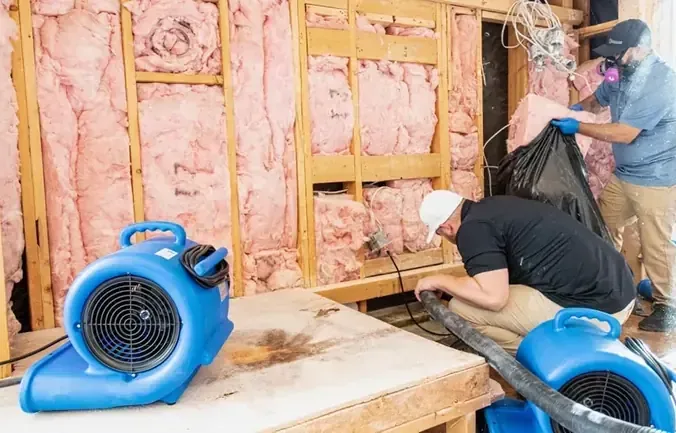
Wall assemblies need direct moisture checks throughout the dry-out. Materials release absorbed water at different rates, and inaccessible layers can lag behind exposed surfaces. The drying technician establishes a comparison with unaffected material, maps the wet points and checks whether the equipment reaches the moisture that remains inside the structure.
First steps for structural drying in Hastings
- 1
Confirm the water source is controlled
The owner should tell the drying team about continuing leaks or renewed entry. Continuing water entry adds moisture to the assembly and delays the drying process.
- 2
Keep equipment operating as directed
Residents avoid moving air movers or turning off dehumidifiers for long periods without discussing it. The planned balance depends on both airflow and moisture removal.
- 3
Preserve access to monitored points
Furniture and stored items should not block the marked wet areas. The technician needs consistent access to compare readings and identify any stalled section.
- 4
Report changes in the room
New staining, an equipment alarm or a power interruption belongs in the job record. 24/7 dispatch supports active water problems that develop during the dry-out.
What does structural drying cost in Hastings, MN?
Structural drying commonly ranges from $1,200 to $5,500 after bulk water removal, with dense or concealed assemblies potentially costing more. Equipment load, monitoring duration, access and the material class determine the scope rather than a fixed number of fans.
Contained drying zone
- Accessible wet materials
- Limited equipment setup
- Daily progress measurements
Several wet assemblies
- Room and cavity checks
- Balanced dehumidification load
- Adjusted airflow positions
Dense or concealed materials
- More access evaluation
- Longer retained-moisture checks
- Specialized drying decisions
These planning ranges are not a quote. Water category, affected square footage, material class and the delay before drying all influence the scope. Compare the inputs in the Hastings water damage cost calculator for a closer range.
Build the drying plan around the actual materials
Drying jobs near Lake Rebecca, Lake Isabel and Vermillion Falls start with the affected material assembly. At each property, the specialist checks how far water has penetrated wood, concrete and interior finishes. The drying plan accounts for the depth of wetting and access to each layer. The specialist evaluates the affected assembly and the amount of evaporation required, then selects suitable air movers and dehumidification. Dense materials or layered flooring can require a different approach from a small accessible drywall area.
- Record the material type at each measurement location.
- Use an unaffected comparison that is relevant to the wet assembly.
- Identify trapped layers that need access rather than simply more room airflow.
Balance evaporation with moisture removal
Air movers help moisture leave exposed surfaces, while dehumidifiers remove it from room air. Too much air movement without enough moisture removal can leave an ineffective drying environment. The technician checks temperature, relative humidity and equipment operation alongside material readings. Equipment placement changes when a pocket remains damp or the drying load falls, rather than staying fixed for the entire job.
- Keep the drying space configured as the technician directs.
- Report interrupted power or equipment alarms promptly.
- Do not assume a warmer room means faster material recovery.
Use the record to decide when repairs can proceed
The contractor documents the final condition at the same points used during monitoring. The drying-time estimator offers a planning window, not a deadline for equipment removal. If standing water remains, extraction comes first. Cleaning and contaminated-material removal also precede ordinary drying where needed. The completion record should identify retained materials, any unresolved source concern and the assemblies that are ready for the repair contractor to close.
Structural drying across Hastings and Dakota County
The restoration team serves ZIP 55033, including Downtown and homes around Lake Rebecca and Lake Isabel. Access, the water source and the rooms affected shape each inspection and equipment plan.
Nearby coverage reaches Prescott, Cannon Falls, Red Wing, Farmington and Oak Park Heights.
Related water damage services in Hastings
Structural Drying questions in Hastings, MN
What does a dry reference mean?
The technician compares affected material with a suitable unaffected example in the building. That reference helps interpret readings in context rather than treating one universal number as correct for every material.
Can more fans replace a dehumidifier?
No. Air movement encourages evaporation, but the released moisture still needs removal. The equipment plan balances both functions according to the room and material load.
Why are concrete and wood measured separately?
Concrete and wood retain and release moisture differently. The technician selects the appropriate meter settings and checks each material separately, including adjoining layers reached by the same leak.
Does the dry-out always finish in three days?
No fixed duration fits every loss. Dense materials, concealed layers, delayed extraction and renewed entry can extend the work. Daily measurements determine whether the drying goal has been reached.
Can windows stay open while equipment runs?
The technician configures the drying environment for current conditions. Unplanned outside air can change the moisture load, so occupants should follow the equipment instructions rather than altering ventilation independently.
What does IICRC S500 add to the process?
The standard provides a framework for assessing water damage and planning restoration. Moisture mapping, material evaluation and documented drying decisions put that framework into practice. The record shows how equipment settings and material readings change during the work.
Let measurements support the next repair step
The drying team follows the affected materials and adjusts equipment as conditions change. 24/7 dispatch supports new or continuing water entry during recovery.
(888) 432-4933Arrange a measured structural dry-out- Hastings, MN · Dakota County
- (888) 432-4933, open 24/7
- Dried to the IICRC S500 standard
- Find us on Google