Red Wing Water Damage Restoration
Water beneath a doorway can be the first visible sign of a much larger wet area. Red Wing cleanup begins by tracing that spread, removing accessible water and checking the materials that hold moisture.
(888) 432-4933Discuss the affected roomsA clear description of the damage helps establish the next practical step.
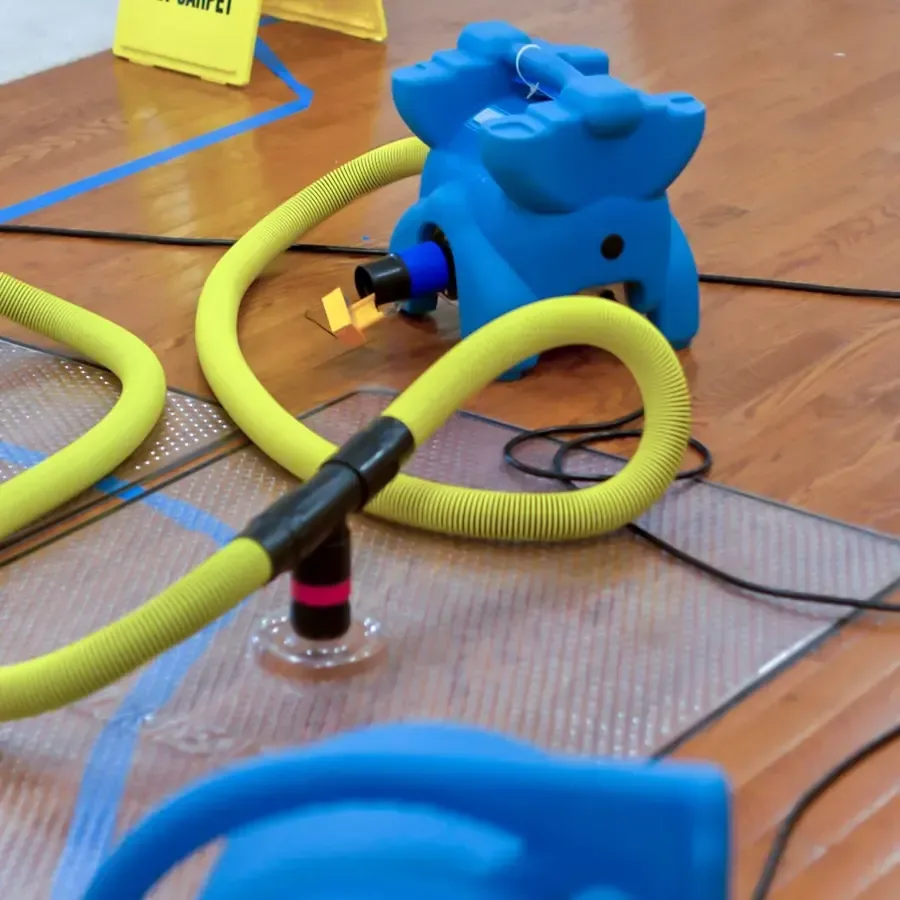
Cleanup shaped around the source
A flooded floor, leaking ceiling and backed up drain need different handling. The service descriptions below explain which materials and access concerns belong in each cleanup plan.
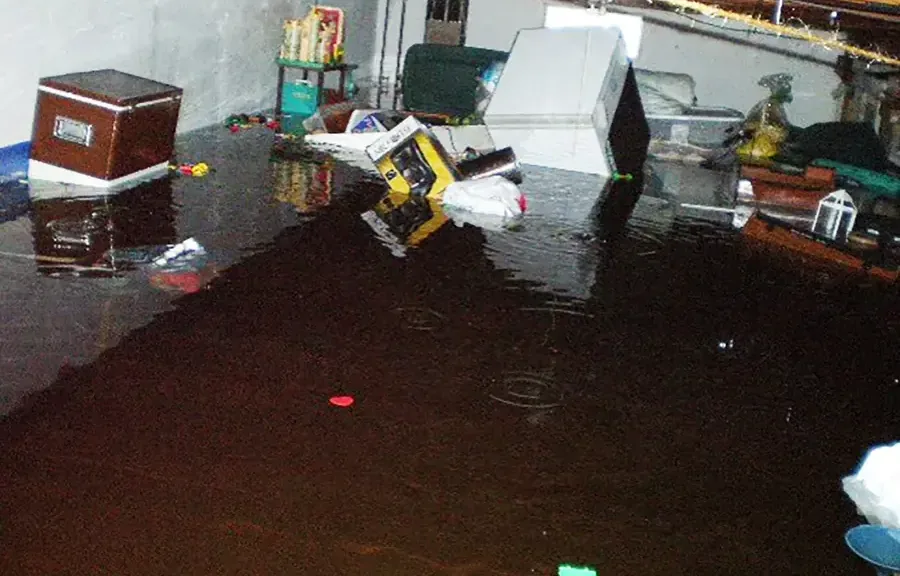
Basement Flood Cleanup
Lower level cleanup addresses wet storage, soaked wall bottoms and trapped floor moisture after the source of basement water is identified.
See basement flood cleanup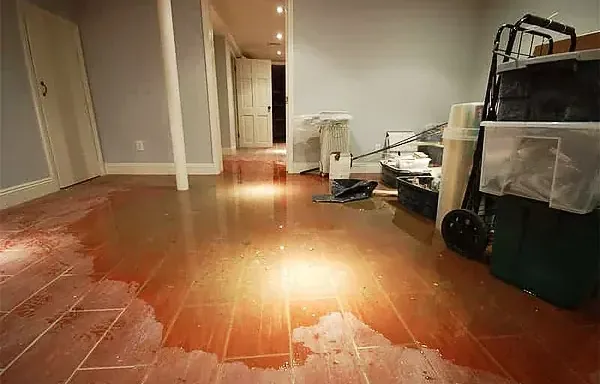
Sump Pump Failure Cleanup
An overflowing pit needs both water removal and a working discharge route before drying equipment can make lasting progress below ground.
See sump pump failure cleanup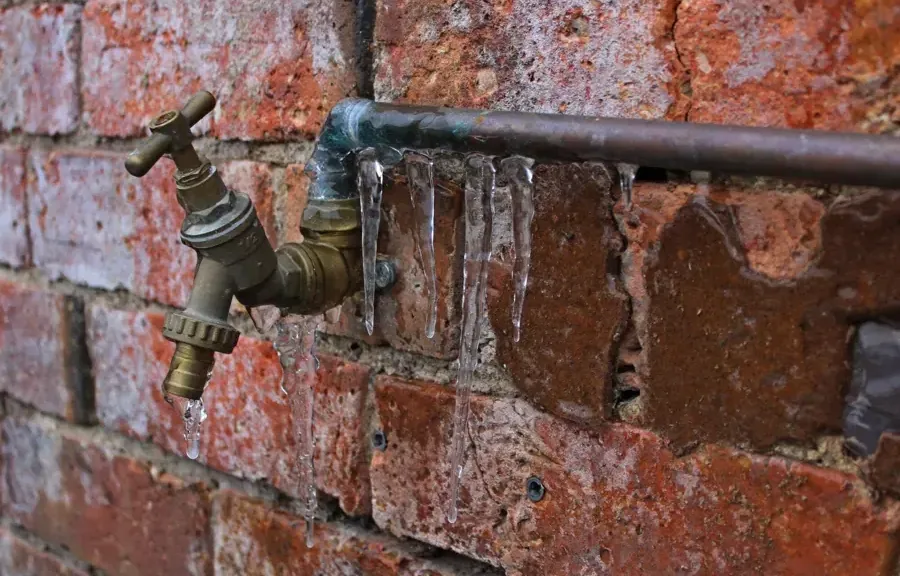
Frozen Pipe Water Damage
Thawing can reveal a split that stayed hidden while ice blocked the pipe. Cleanup follows the escaping water through nearby building cavities.
See frozen pipe water damage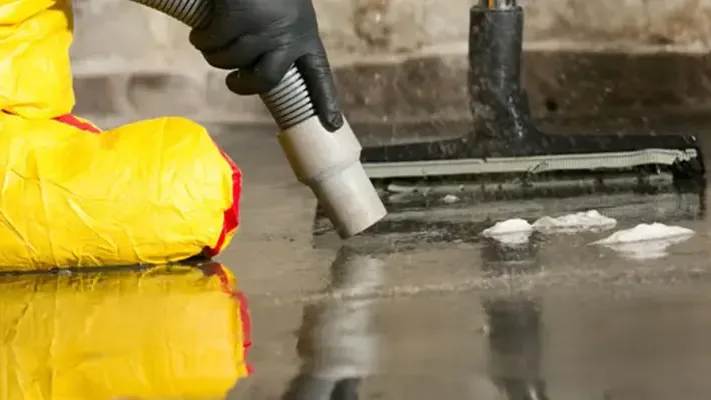
Emergency Water Extraction
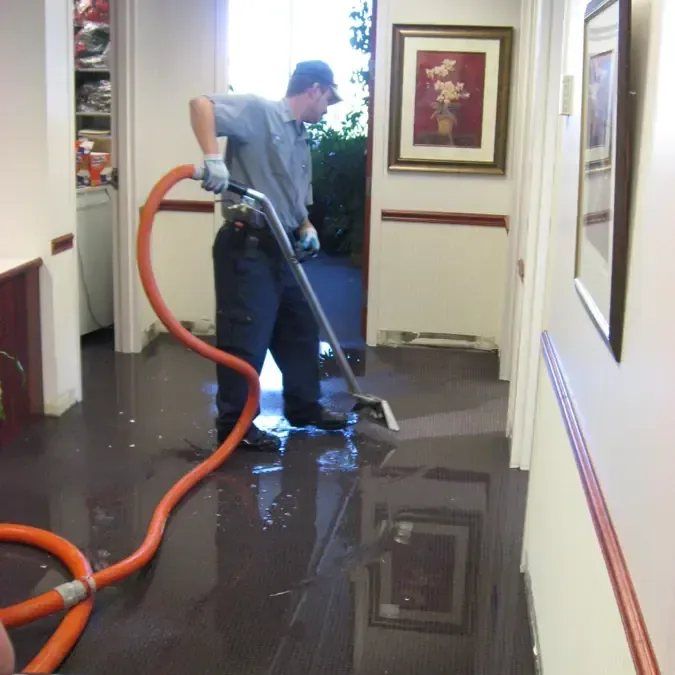
Standing water is removed with equipment selected for depth, debris and floor access, followed by checks for moisture left beneath coverings.
Sewer Backup Cleanup
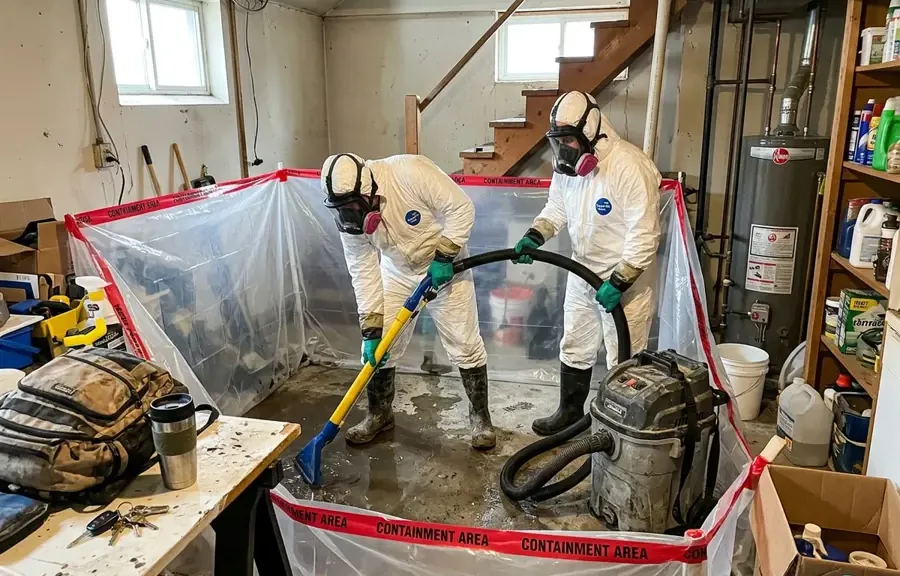
Wastewater contact changes the work area: access control, contaminated material decisions and cleaning come before ordinary room drying can proceed safely.
Flood Cleanup
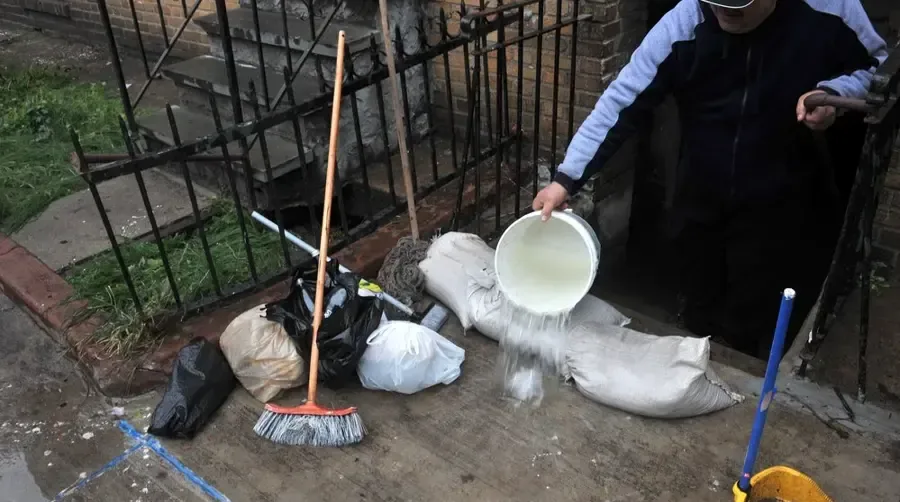
Water entering from outdoors can carry sediment through doorways and low openings. A cleanup plan separates exposed belongings from recoverable building surfaces.
Foundation Seepage Cleanup
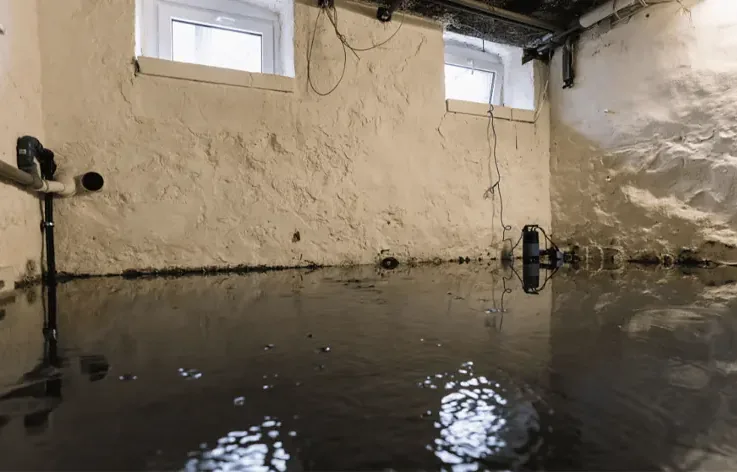
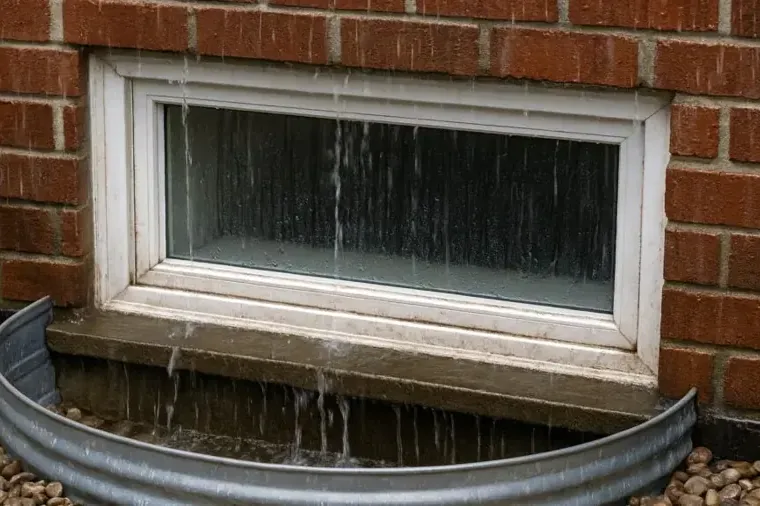
Damp perimeter walls deserve a closer look at entry seams and hidden finishes, alongside attention to the continuing exterior water supply.
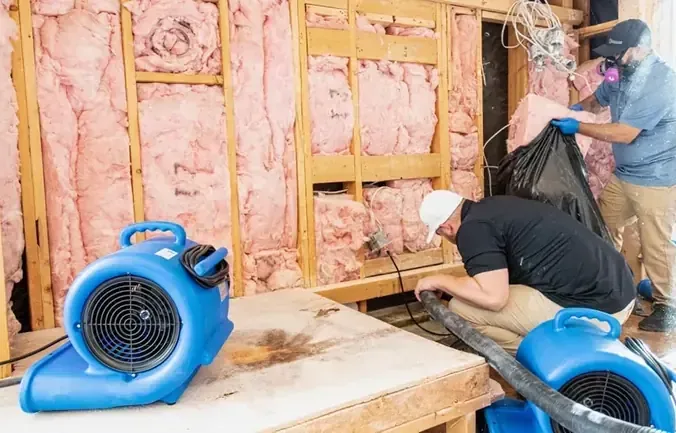
Burst Pipe Water Damage
Pressurized plumbing releases can reach several rooms before a valve closes. The wet route matters as much as the visible pipe break.
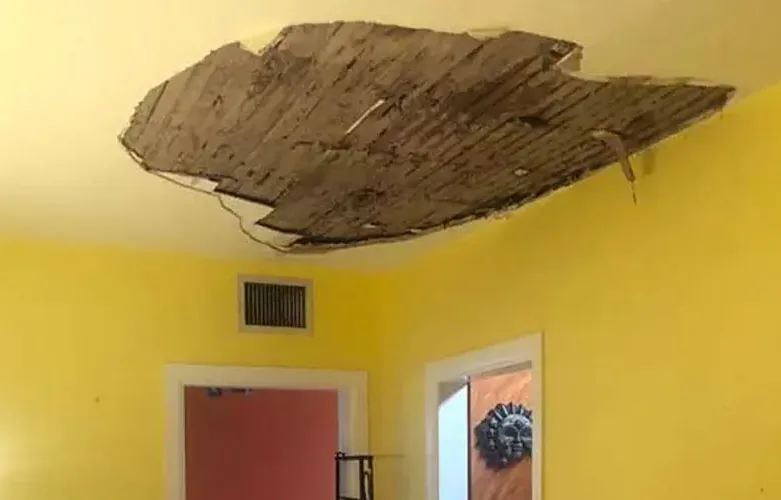
Roof Leak Water Damage
Rain entering overhead can soak insulation before a room shows stains. Roof protection and interior moisture mapping need coordinated attention.
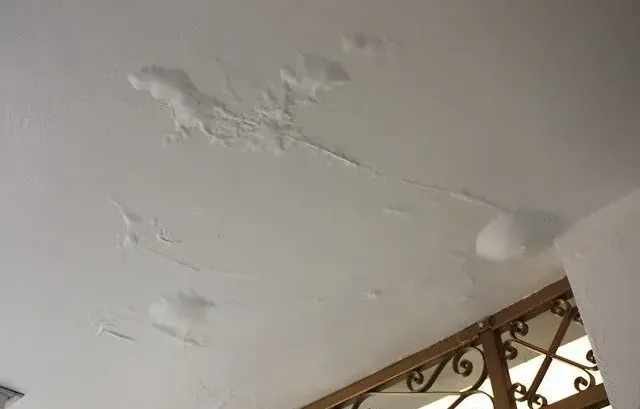
Ceiling Leak Water Damage
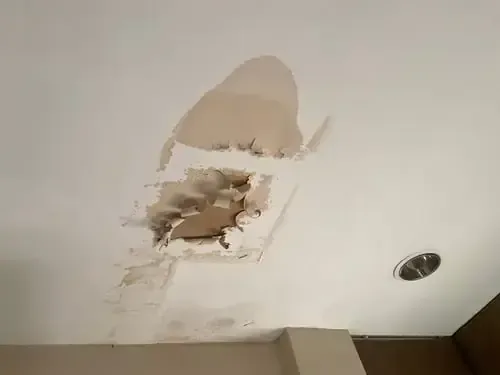
A swollen ceiling requires a protected space below it and careful inspection above it, especially where water approaches lighting or wiring.
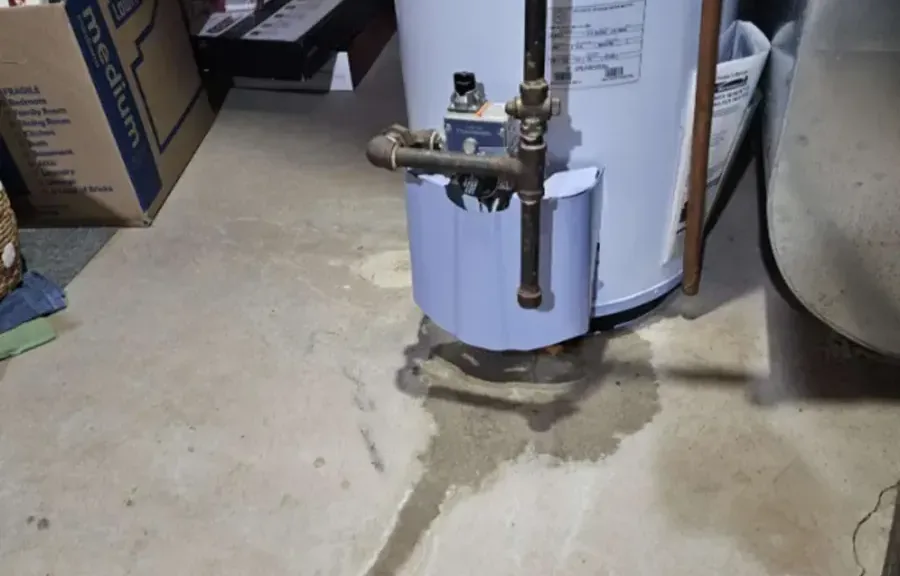
Water Heater Leak Cleanup
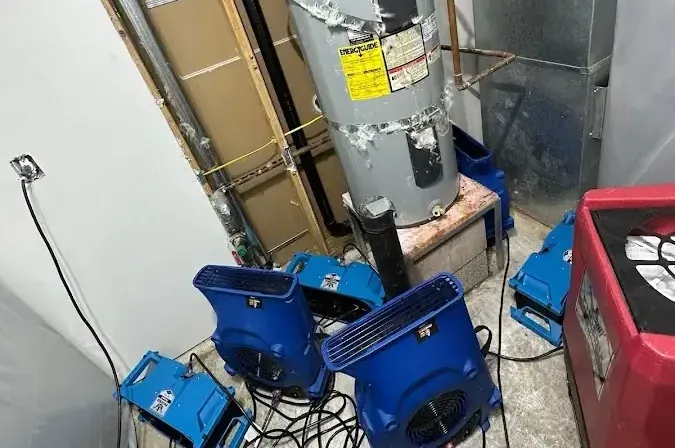
Tank leakage can spread behind a utility closet wall or beneath adjoining flooring, creating a drying job beyond the heater footprint.
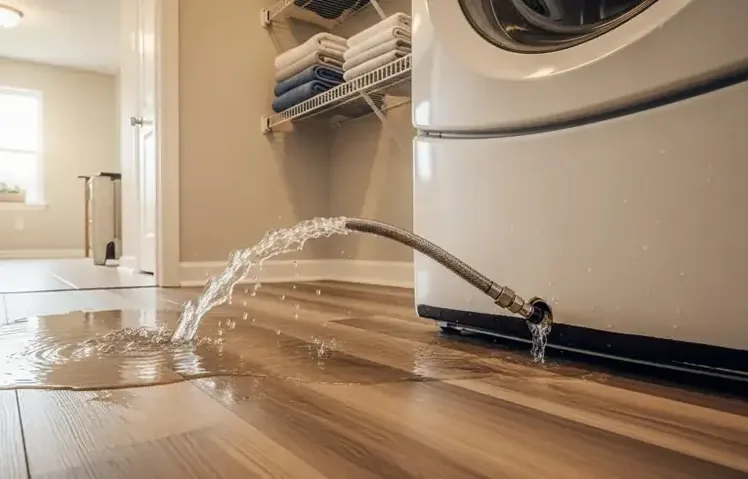
Appliance Leak Water Damage
A refrigerator hose or washing machine connection can wet cabinet bases and floor seams. Hidden edges need inspection after visible puddles disappear.
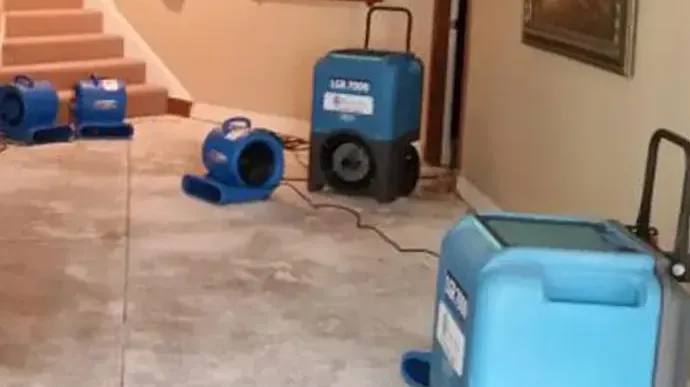
Structural Drying
Measured drying follows moisture inside framing, subfloors and other retained materials, with equipment adjusted as readings change across the affected space.
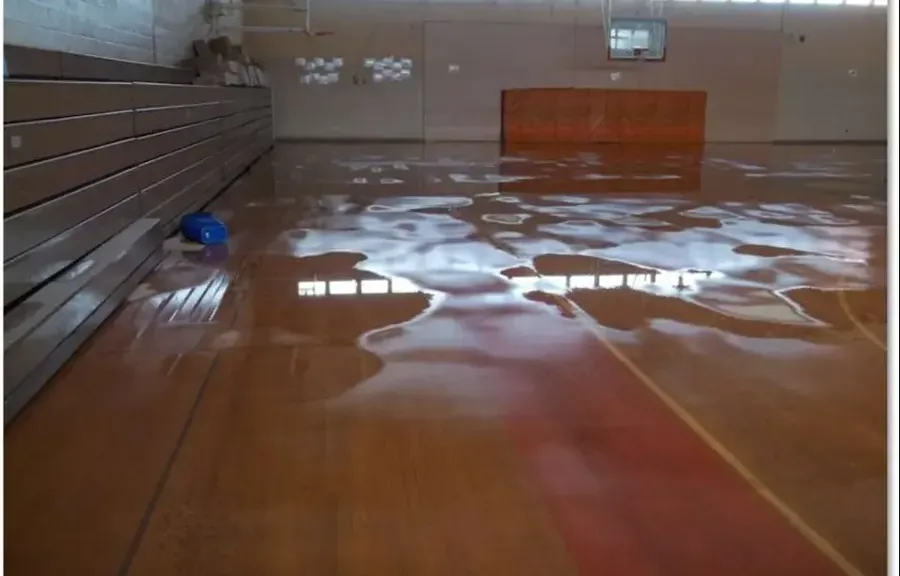
Commercial Water Damage
Business cleanup weighs damaged finishes alongside access, stock and operating areas, allowing practical decisions about which spaces remain available during recovery.
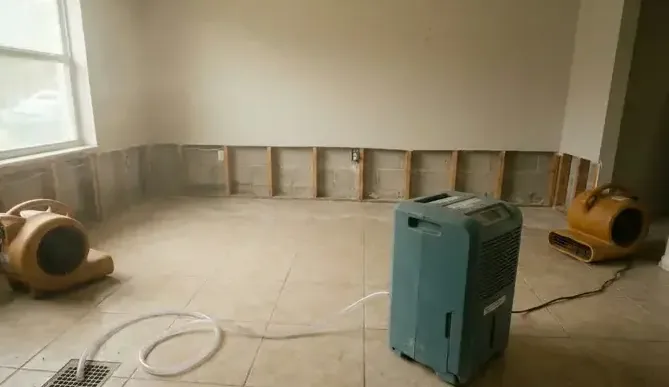
Know what each cleanup decision accomplishes
A homeowner needs more than a list of machines. The proposed work should explain the wet materials, the reason for any removal and the readings that will support the decision to finish drying.
Visible boundaries
Marked areas and room photographs make the inspection understandable, including spots that need another look after furniture or floor coverings have been moved.
Specific removal reasons
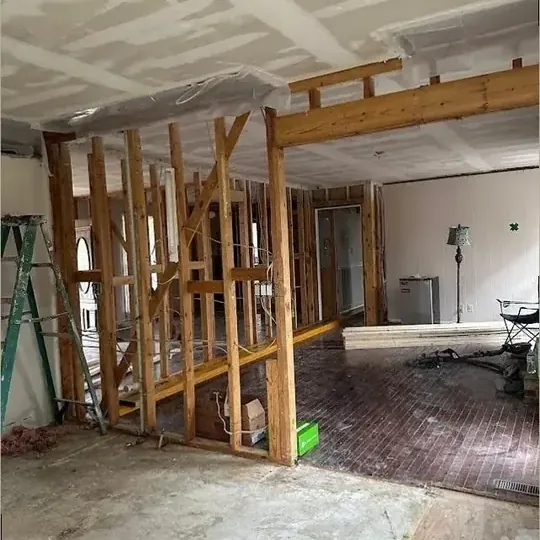
A damaged finish may need removal for access, loss of strength or contamination. Naming the reason helps distinguish cleanup work from later rebuilding choices.
Useful equipment records
Placement notes and moisture observations connect each drying adjustment with the materials being treated, rather than relying only on how warm the room feels.
An orderly finish
The closing conversation should identify remaining repairs, saved documentation and any unresolved water source so the next contractor receives a clear description of the property.
Make the room safer to assess
- 1
Keep a dry boundary
People and pets should remain outside standing water, especially when the source, electrical exposure or stability of overhead materials is unknown.
- 2
Limit the incoming supply
An accessible plumbing shutoff may stop an indoor leak. Reaching it should never require crossing a wet electrical area or unstable floor.
- 3
Record the first view
Photographs from safe positions can show the initial water level, damaged belongings and suspected entry point before cleanup changes the scene.
- 4
Separate the urgent details
The cleanup discussion should identify active water, affected levels, drain involvement and any blocked access before moving into finish or furniture questions.
- 5
Preserve useful paperwork
Repair invoices, equipment records and an item inventory help connect the original event with the cleanup work and later restoration decisions.
A dry surface is only one checkpoint
Finishes can feel dry while backing materials remain wet. A useful restoration record follows the affected assembly from the first inspection through removal decisions, equipment changes and the final moisture assessment.
- Step 1
Locate the wet boundary
Inspection follows water beyond the obvious stain, including adjoining rooms and material transitions where moisture can move out of sight beneath otherwise intact finishes.
- Step 2
Choose what can remain
The source, exposure and condition of each material determine whether cleaning and drying are practical or removal is needed to reach underlying damage.
- Step 3
Manage the drying space
Equipment placement, room openings and collected moisture are reviewed together so air movement reaches wet materials instead of merely circulating through the easiest path.
- Step 4
Document the repair handoff
Final observations explain which assemblies were dried, what was removed and which repairs still need attention before coverings or finishes close the space again.
What affects cleanup costs in Red Wing?
The extent of hidden wetting often matters more than the size of the visible puddle. Red Wing estimates should describe removal, cleaning, drying and damaged materials separately, with the water source and access conditions clearly identified before work is authorized.
Contained wet area
- Accessible floor surfaces
- Limited material removal
- Focused equipment placement
Connected room damage
- Several wet surfaces
- Concealed edge checks
- Documented drying visits
Extensive interior loss
- Broader removal scope
- Complex cleaning needs
- Multiple affected assemblies
These planning ranges do not replace an inspection. Plumbing repairs, rebuilding and unusual access requirements should be explained separately in the proposed scope of work.
Water history belongs in the cleanup plan
Supply pipe escape
Water released from a supply pipe still needs prompt attention because contact with building materials and elapsed time can complicate recovery.
Trace plumbing waterAppliance discharge
A failed appliance connection can produce a small puddle above a much wider wet subfloor. Cabinet edges deserve specific inspection.
Inspect concealed appliance spreadSewage entry
Backed up wastewater requires controlled handling and decisions about exposed porous materials before routine drying methods are appropriate.
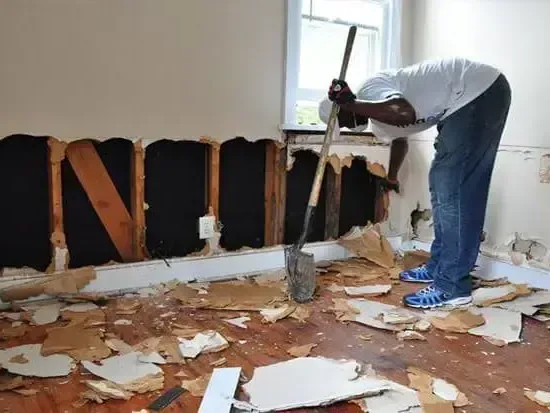
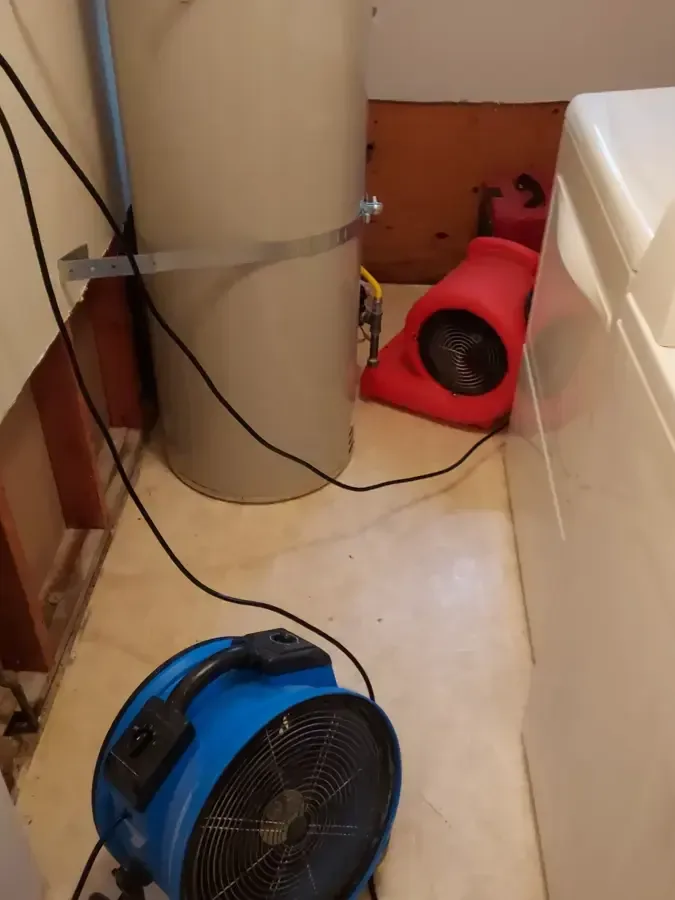
Assess contaminated room handlingRemoval, access and drying at different stages
Build a clear record of damage
Photographs and written observations help explain what happened and what cleanup changed. Coverage questions belong with the policy provider, alongside a description of the actual water source.
- Photograph visible entry points from safe dry ground
- List damaged belongings with their original room locations
- Keep invoices for source repairs and emergency work
- Save moisture notes and material removal records
- Record conversations about coverage and claim requirements
Separate repair from cleanup
A cleanup estimate should distinguish work on wet materials from the repair that stops the leak. A pipe replacement, roof repair or replacement appliance may involve a different contractor, and those charges need their own explanation.
Before authorizing rebuilding, the owner should understand the drying outcome and remaining permit questions. That sequence helps prevent new finishes from covering an unresolved source or damp assembly.
Describe the location and the affected space
Useful location references
Postal area
Other town pages
Different sources can reach the same floor
Red Wing sits along the upper Mississippi River, and the city maintains stormwater and sanitary sewer systems. A wet room needs its own source investigation, whether the first clue is outdoor water, a backed up drain or leaking plumbing.
- River access
Flood precautions have included closures at the Frazier Street public boat launch and Bay Point Park. Current restrictions affect property access.
- Cold weather
Many city water services froze during the extremely cold winter of 2013 to 2014. Frozen service questions belong alongside assessment of any interior leak damage.
- Building repairs
Structural repairs and alterations require a city building permit. Permit planning belongs before reconstruction covers areas opened for cleanup and drying.
- Changing access Levee Road has been closed during anticipated flooding. A cleanup visit should account for current restrictions and a safe route into the affected building.
- Concealed plumbing damage A thawed pipe may release water behind a finished wall. Inspection should follow that route instead of stopping at the nearest visible stain.
- Separate drainage paths Stormwater and sewage involve different systems. The position of a puddle alone cannot settle which cleanup precautions or source repairs are appropriate.
- Damp lower finishes Water at a wall base can extend beneath flooring or behind trim. Checking those edges helps define the actual drying area before equipment placement.
- Reconstruction coordination The Building Inspection Division oversees code compliance. Structural work discovered during cleanup should be discussed before replacement finishes conceal the affected framing or connections.
Questions after water reaches the house
What details are useful during the first cleanup call?
The most useful description covers where water appeared, whether it is still entering, which floors are affected and whether drains are involved. Electrical concerns, unstable ceilings and blocked access should be mentioned early so the initial visit can be planned around those conditions.
Does a riverfront location determine the cleanup method?
The method follows the water that actually entered and the materials it contacted. Mississippi River water, a plumbing leak and a sewer backup have different handling needs. Photographs, entry marks and inspection of the building help establish the appropriate work scope.
Can a homeowner start moving wet belongings?
Light belongings may be moved from a dry, safe position when clean access is available. Items exposed to sewage should remain within a controlled area for assessment. Heavy wet furniture and belongings beneath a sagging ceiling need professional handling rather than hurried lifting.
How is hidden moisture checked after pumping?
Inspection follows the wet boundary through floor edges, wall bases and adjoining cavities. Moisture readings help identify material that still needs drying even when the room no longer contains standing water. Some assemblies require limited opening to make inspection or drying possible.
When do permit questions become part of recovery?
Red Wing requires permits for structural repairs and alterations, as well as water heater installation or replacement. The repair scope should be reviewed before reconstruction. Cloudpermit is the city's application and inspection system, so cleanup records can help describe the planned work.
Can a water leak affect sewer billing?
The city offers a Sewer Usage Adjustment Request Form for leaks when excess water did not enter the sanitary sewer. Owners should preserve the leak history and repair documentation for assessment under the city's adjustment policy. Approval and any amount depend on that assessment.
Should drying equipment stop when the room feels comfortable?
Comfort and material dryness measure different things. Equipment decisions should follow the moisture condition of retained materials and the controlled drying space. An apparently normal room can still contain wet backing, framing or floor layers that need further attention before repair.
What happens if the water returns during cleanup?
A returning puddle means the incoming source needs another assessment. Pump operation, pipe isolation, exterior entry and drain behavior may each require attention depending on the event. Drying plans should be adjusted after the renewed water is controlled and the affected area reassessed.
What paperwork should remain after the job?
Useful records include the original photographs, cleanup scope, removed material list, drying observations and source repair invoices. Keeping those documents together supports insurance discussions and gives the repair contractor a clearer picture of the assemblies that were opened, cleaned or dried.
Turn the first observations into a plan
A careful description of the property can focus the next inspection. Identify active water, unsafe areas and the finishes that changed, then discuss removal, cleaning and measured drying for the affected rooms.
(888) 432-4933Arrange a damage discussion- Hastings, MN · Dakota County
- (888) 432-4933, open 24/7
- Dried to the IICRC S500 standard
- Find us on Google