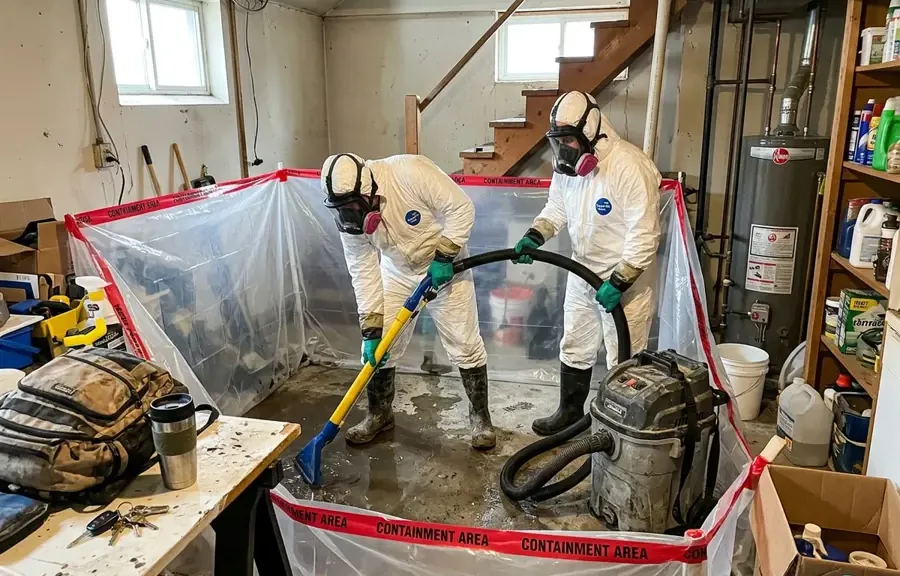
A drain backup needs a precise description before it needs a theory about the cause. Farmington's Streets and utilities staff inspect, clean and maintain the local sewage collection system, while Metropolitan Council Environmental Services provides city sewage services. An owner who records where water emerged, which fixtures were affected and how the indoor area changed can support both the utility report and the cleanup plan. Contaminated room surfaces also need a separate assessment while the drainage problem is investigated.
Key takeaways
- Occupants should avoid contact with sewage and keep access to the affected room restricted.
- A report should name the drain or fixture, the room and whether discharge is continuing.
- Local collection maintenance and regional sewage treatment are different parts of the municipal system.
- The Industrial Park study describes storm sewer backups, so that history should stay separate from sanitary drain observations.
- A useful cleanup scope covers contaminated contents, attached materials and the route used to remove them.
Describe what emerged from the drain
An owner can provide useful information without opening a cleanout or trying to trace a buried connection. The initial report should state whether water appeared from a floor drain, toilet or another fixture and whether nearby fixtures behaved differently.
It should also describe visible solids, the extent of the wet floor and any room that cannot be entered safely.
Timing helps the person investigating the drainage problem. Notes can record when the discharge was discovered, whether household water was being used and whether the level continued rising after that use stopped.
Observations should be preserved as they happened, so a later conversation does not have to reconstruct the sequence from memory.
The cleanup team also needs to know which surfaces and belongings were exposed. A photograph from the doorway can show the original wet area without requiring someone to walk through it.
This first view becomes a useful reference when removal and cleaning change the room's appearance before the source investigation is complete.
- Name the fixture where discharge first appeared.
- Note whether other drains reacted at the same time.
- Record the visible floor area from a dry position.
- Keep household members and pets away from contaminated surfaces.
Route the utility concern with the right context
The local sewage collection system includes pipes, manholes and lift stations, and Streets and utilities staff inspect and maintain it. A resident reporting a suspected collection issue should give the location and the drain behavior observed.
The report can identify affected fixtures without assigning the problem to a specific section of the system before it is examined.
Metropolitan Council Environmental Services provides the city's sewage services. The Metropolitan Council owns and operates the regional system of sewage pipes and lift stations, and regional interceptors carry raw sewage to treatment plants.
The local treatment facility is in the City of Empire, providing context for the regional system beyond the property's drains.
Those municipal roles help organize communication, while a plumbing professional can assess the drainage serving the building. The owner should retain the contact notes and source findings together.
The sewage cleanup scope can then identify the indoor exposure independently, including rooms that need controlled access during the investigation.
Keep storm drainage observations in a separate report
Part of the storm sewer system extends through the Industrial Park and discharges into a ditch across the northwest corner of the Northern Natural Gas property. The city study describes storm sewer backups upstream of that ditch and recommends additional surface stormwater storage in the drainage area.
That is a specific outdoor drainage history.
A homeowner seeing water across a yard or exterior threshold should describe that route directly. A separate note should describe any water returning through an indoor drain.
Recording both observations makes it easier for utility staff and the cleanup contractor to understand what actually occurred at the property, particularly when several wet areas appear during the same period.
The city describes stormwater as rain or melted snow flowing off streets, lawns and other surfaces. That description can help an owner organize the outdoor portion of a report, while the indoor file records fixture discharge and affected materials.
Separate photographs of the exterior path and the drain opening preserve the distinction throughout the job.
Control the path used for contaminated belongings
An affected room may contain laundry, stored cartons, furniture and attached shelving. Before those items move, the crew should establish how material will leave the room and how dry areas will be protected.
A controlled route helps keep contaminated handling separate from the spaces occupants still use, especially where the only exit crosses a shared hallway.
The contents inventory should record an item's original location, visible exposure and handling decision. Porous belongings and attached finishes may need removal, while other surfaces can receive a cleaning assessment.
The owner benefits from photographs and written decisions before items disappear into a debris load or move to a temporary holding area.
A lower level loss can also require basement cleanup across several connected spaces. The contractor should identify doorways, closets and partition bases reached by the discharge.
Those connections belong in the containment and removal plan so a small source opening does not become an artificially small cleanup boundary.
- Agree on the debris route before moving exposed items.
- Label contents by their original room.
- Record decisions for fixed cabinets and shelving.
- Keep clean belongings outside the removal pathway.

Prepare the retained structure for measurement
Cleaning and material removal should leave an assembly that can be inspected and dried. The work record should identify the exposed surfaces, the areas cleaned and any cavity that still needs access.
This gives the drying technician a concrete starting point after the original sewage and recoverable liquid have been addressed.
The structural drying plan follows the retained framing, floors and other affected building materials. Readings should use consistent location labels so later visits show how those same materials respond.
A note about an inaccessible cabinet base is useful because it explains where the inspection remains incomplete and what needs to happen next.
Equipment arrangements should also preserve the separation between active work and occupied rooms. The technician can explain which doors, openings and routes need to stay available for the setup.
Occupants should coordinate any change with the crew before returning belongings or altering the room arrangement during the drying period.
- Save images of exposed surfaces after cleaning.
- Identify material locations that need repeated checks.
- Keep equipment access clear during occupied hours.
- Document any additional removal needed to reach a wet pocket.
Finish with distinct source and interior records
The drainage contractor's finding should explain the inspected source and the correction performed. The indoor record should explain exposure, removal, cleaning and material drying.
Putting both in the same project folder helps the owner follow the loss while keeping the separate work scopes clear for anyone examining the final condition.
Before a room returns to ordinary use, the owner and contractor should discuss remaining tasks by location. A repaired drain, an open wall and a removed storage cabinet each require a different completion note.
Naming the unfinished surfaces makes it easier to schedule the right trade and avoid moving belongings into an area that still needs work.
Farmington's utility structure includes both local collection maintenance and regional treatment, but the owner's final household file can remain simple. A chronology, contact notes, source report, room photographs and repair list provide a usable account.
Each document should refer to the same rooms and observations so the record remains understandable after the urgent work has ended.
Questions
Who maintains the local sewage collection system?
Streets and utilities staff handle inspection, cleaning and maintenance of the local collection system. Regional sewage service is provided through Metropolitan Council Environmental Services, with the local treatment facility in the City of Empire.
What detail is most useful in the first indoor report?
Identifying the exact drain or fixture gives the investigator a starting point. The owner can add when discharge began, whether it continues and which adjoining surfaces became wet.
How should outdoor pooling and a drain return be documented?
Separate observations and photographs keep both paths understandable. The record can show the exterior water route and the indoor fixture behavior without combining them into a single assumed cause.
What belongs in the final contents record?
The inventory should show where exposed items started, the handling decision and their final location or disposal status. Photographs help connect each decision to the material condition seen during cleanup.